One of the interesting – and honestly, slightly unsettling – things about social media is realizing just how well the “algorithm” gets to know you. At first, it’s kind of fun. You watch one video about grilling steaks… suddenly every third video is someone smoking brisket. You watch one clip about restoring old Jeeps… now you’re apparently an expert mechanic. You pause for three seconds on a travel video… suddenly you’re getting vacation packages to Iceland. It’s fascinating. And if I’m honest… it’s also a little creepy.
Thank you for taking the time to read this homily for the 16th SUNDAY IN ORDINARY TIME -JULY 19, 2026 – Your support means a great deal to me, and I’m deeply grateful for the many who share these messages with their friends, families and social media followers. If you’ve found meaning in these words, I’d be grateful if you’d share them with others who might benefit.
And for those who prefer listening, you can find the audio version on SoundCloud HERE or subscribe to the podcast on iTunes HERE. Your comments, messages, and the way you’ve embraced these homilies continue to inspire me. Sincerely in Christ -Father Jim
Apparently, somewhere out there, there’s a computer that knows what I’m likely to watch before I even know myself.
One thing my algorithm has figured out is that I love hearing people’s conversion stories. For whatever reason, whenever someone shares how they found God – or maybe more accurately, how God found them – I almost always stop scrolling.
A few weeks ago one came across my feed that I couldn’t stop thinking about. In fact, I bookmarked it because I knew I’d want to come back to it. It was written by a young man named Joey. He was incredibly honest and vulnerable as He said: Five years ago I was living with my girlfriend. She considered herself Christian, but faith wasn’t a huge part of her life. I was an agnostic who was experimenting with Eastern mysticism. Sometimes she’d play worship music around the house. Oddly enough, something in those songs stirred something in me. They awakened a longing for Jesus that I hadn’t felt since I walked away from Him fifteen years earlier.
Then Joey wrote something remarkable.
One night as we were lying in bed, I experienced what I can only describe as an almost otherworldly rebuke. The message was simple: ‘This isn’t what I have for you.’
Joey knew. He knew he had to leave. He knew God was calling him somewhere else.
But then he admitted something that makes his story so believable.
He didn’t leave.
Not right away.
He stayed. Because he was comfortable. Because he was afraid. Because changing his life would hurt. Because following God is often far more costly than we imagine. Joey says he spent almost another year resisting what he already knew God was asking.
Eventually he did leave. He was baptized. He later entered the Catholic Church. And looking back he wrote something that struck me. I still don’t know exactly what God has planned for me… but I know very well what He doesn’t.
Isn’t that honest? Most of us spend our lives wanting God to reveal the entire blueprint. “Lord… where should I live?” “What job should I take?” “Who should I marry?” “What should I do next?”
Most of the time… God doesn’t answer those questions first. He starts with something much simpler. “This isn’t what I have for you.”
Before He tells us where to go…
He often points out what we need to leave behind.
And that’s exactly what today’s Gospel is about. Jesus tells this somewhat strange and confusing parable about wheat and weeds growing together. If you were a farmer, this story would almost sound irresponsible. The servants notice weeds. Naturally they ask, “Should we pull them up?” And the farmer says… “No?”
Any farmer knows weeds steal nutrients. They choke healthy plants. They spread. Why would you leave them there? Jesus says because if you rush to pull out the weeds… you might uproot the wheat too.
That’s not how God works.
Because God is patient.
That’s exactly what we heard in the first reading. “You gave your children good ground for hope that you would permit repentance for their sins.” What a beautiful line. God permits repentance. He gives time. He waits. He is astonishingly patient.
I think one of the greatest misunderstandings people have about Christianity is believing that becoming holy happens overnight.
It doesn’t.
Conversion is almost never an event. It’s a process.
We imagine the saints woke up one morning completely transformed. Even if we’re well versed in their stories, we can somehow distance ourselves and our experiences from theirs thinking they must had something special that made holiness possible. Spoiler alert – They didn’t. Peter didn’t.
Augustine didn’t. Francis of Assisi didn’t. Mother Teresa didn’t.
They all had weeds. So do we.
Maybe that’s one of the reasons Joey’s story resonated with me. Notice what God didn’t do. God didn’t instantly erase every bad decision. He didn’t magically make the relationship disappear. He didn’t force Joey to obey. He simply whispered: “This isn’t what I have for you.”
Then…He waited.
Because God refuses to violate our freedom.
Love never forces. Love invites.
I wonder how many of us have experienced something similar. Not necessarily hearing words… but sensing… “I shouldn’t be doing this anymore.” “This relationship isn’t healthy.” “This resentment has to end.” “I need to forgive.” “I need to go back to Confession.” “I need to stop drinking so much.” “I need to spend more time with my kids.” “I need to put my phone down.” “I need to come back to Mass.”
Those little nudges. Those quiet promptings. We often dismiss them. We think they’re random thoughts. Today’s second reading says otherwise. St. Paul tells us that the Holy Spirit intercedes for us. Sometimes before we even know how to pray… God is already praying within us.
Before Joey ever opened a Bible…
Before he walked into a Catholic church…
Before he knew what God wanted…
The Holy Spirit had already begun cultivating the field.
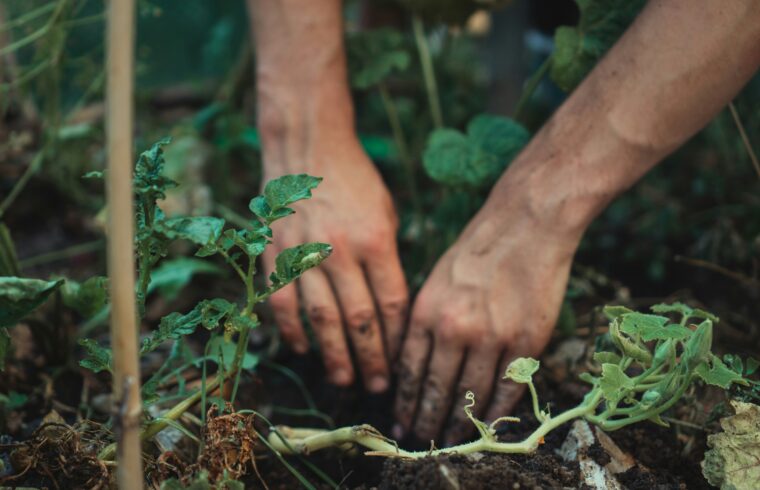
That’s what gives me hope. The field in Jesus’ parable isn’t divided into two sections. One side wheat. One side weeds. No. The same field contains both. That’s my heart. And if I had to guess that’s your heart as well.
There is genuine goodness. There is faith. There is generosity. There is kindness.
And there are also weeds. Pride. Fear. Selfishness. Anger. Addiction. Jealousy. Old wounds.
They’re all growing together. Sometimes we’re tempted to define ourselves by the weeds. “I’m just an angry person.” “I’m too broken.” “I’ve made too many mistakes.” “I’ll never change.”
Jesus says… No. I see wheat. Don’t define yourself by what still needs healing. Define yourself by what My grace is growing. The enemy loves to convince us that because weeds exist… the harvest never will. Jesus says exactly the opposite.
The harvest is coming. Keep growing. Keep trusting. Keep cooperating with grace.
One of the most moving parts of Joey’s story wasn’t actually his conversion. It was the last line. He wrote: “Thank God for turning a bad situation into good. It’s what He does.” That really is the story of salvation.
Think about Scripture. Joseph’s brothers sold him into slavery, but God brought good from it. Peter denied Jesus three times, yet became the rock on which Christ built His Church as the First Pope. Paul persecuted Christians, and God transformed him into the greatest missionary the world has ever known. And, of course, the Cross itself – the greatest evil humanity has ever committed -became the greatest act of love the world has ever known.
God has always specialized in bringing good out of brokenness. Not because the weeds are good… but because His mercy is greater.
But here’s the important part.
God didn’t force Joseph. He didn’t force Peter. He didn’t force Paul. And He didn’t force Joey.
He won’t force us either. Love never forces. Love invites.
God is incredibly patient – but His patience is never passive.
He’s constantly at work. He’s planting, watering, pruning, speaking, nudging, encouraging, forgiving. And again as St. Paul reminded us the Holy Spirit, is praying within us even when we don’t know how to pray ourselves.
The question isn’t whether God is at work. The question is whether we’re willing to cooperate with what He’s doing.
Whether we’re willing to trust Him enough to let Him pull us away from what is keeping us from becoming the people He created us to be.
Whether we’re willing to stop clinging to the weeds simply because they’ve been part of our lives for so long.
Maybe that’s the invitation of today’s Gospel. Don’t spend your life obsessing over the weeds. Spend your life staying close to the Farmer. Because wheat doesn’t grow by trying harder. It grows by staying rooted where the Farmer can tend it.
This week, maybe our prayer doesn’t have to be, “Lord, show me Your entire plan.” Maybe it’s simply this: “Lord, I trust that You’re already at work in my life. Help me recognize Your voice. Give me the courage to cooperate with Your grace. And help me surrender whatever You’re quietly saying, ‘This isn’t what I have for you,’ so that You can grow in me the person You created me to become.”
Because that’s the beautiful truth behind all three readings today. God is patient. The Holy Spirit is already at work. The harvest is possible.
But the wheat still has to keep turning toward the sun.
So let us trust the Divine Farmer… cooperate with His grace… and allow Him to do in us what only He can do.
He can take an ordinary field…filled with weeds and wheat…
and, if we’ll let Him…
raise saints.