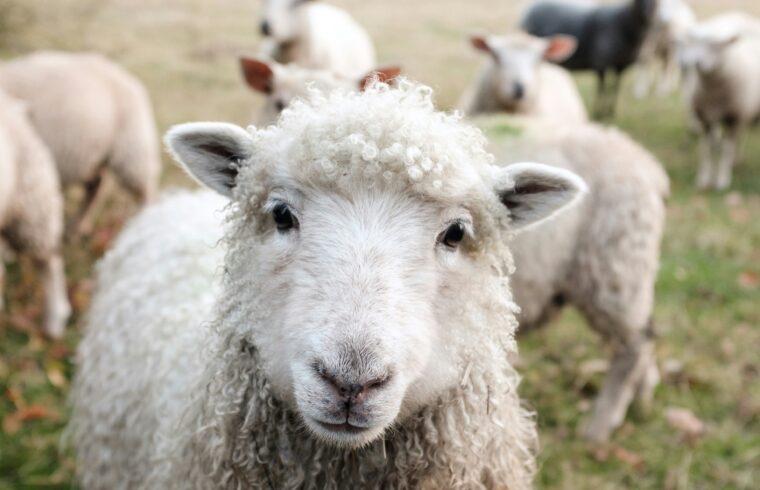
One of the more awkward moments in the Gospel comes right at the beginning of today’s reading. Matthew tells us that Jesus looked out at the crowds and was moved with pity for them because they were “troubled and abandoned, like sheep without a shepherd.” Now, if you’re anything like me, your first reaction might be, “Thanks, Lord. Sheep.” Of all the animals Jesus could have picked, sheep aren’t exactly known for their brilliance. Nobody has ever looked at a genius and said, “That person is really sheep-like.”
Thank you for taking the time to read this homily for the 11th SUNDAY IN ORDINARY TIME -JUNE 14, 2026 – Your support means a great deal to me, and I’m deeply grateful for the many who share these messages with their friends, families and social media followers. If you’ve found meaning in these words, I’d be grateful if you’d share them with others who might benefit.
And for those who prefer listening, you can find the audio version on SoundCloud HERE or subscribe to the podcast on iTunes HERE. Your comments, messages, and the way you’ve embraced these homilies continue to inspire me. Sincerely in Christ -Father Jim
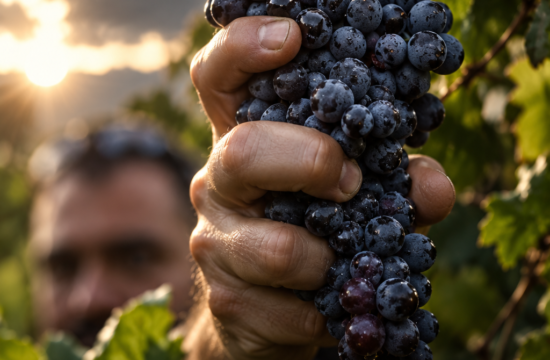
And if that wasn’t enough, Jesus immediately shifts to another image that isn’t much better for our egos. He says the people are like a field ready for harvest.
So after all the great feasts we’ve celebrated these past months—Easter, Ascension, Pentecost, Trinity Sunday, Corpus Christi—the first big message of Ordinary Time seems to be this: We’re either livestock or produce.
Not exactly inspiring.
But if we stop there, we miss the point. Jesus isn’t insulting the crowds. He’s loving them. The focus isn’t on the sheep. The focus is on the shepherd. Because sheep without a shepherd aren’t stupid. They’re vulnerable. They’re exposed. They’re easy prey. They wander. They get lost. They struggle to find what they need.
And when Jesus looks at the crowds, what strikes Him is not their weakness but their suffering. It’s worth remembering what Jesus had been doing immediately before today’s Gospel. Matthew spends the previous chapters describing miracle after miracle. Jesus heals lepers. He gives sight to the blind. He makes the lame walk. He calms storms. He raises the dead. He casts out demons. Everywhere He goes, He is relieving suffering, restoring dignity, and changing lives.
How do people respond? Some are amazed. Some become followers. Some remain skeptical. Some are openly hostile. In fact, immediately before today’s Gospel, Jesus casts a demon out of a man, and rather than rejoicing that the man has been set free, some of the religious leaders accuse Jesus of being in league with demons Himself. Imagine that. Jesus spends His day healing the sick, comforting the suffering, freeing the oppressed—and gets accused of being evil for doing it.
Yet He doesn’t become cynical. He doesn’t become bitter. He doesn’t throw up His hands and say, “Forget it. These people don’t appreciate anything.” Instead, Matthew tells us that He looked at the crowds and was moved with compassion. Not frustration. Compassion.
Because Jesus sees something deeper than the immediate problems. Yes, people need physical healing. Yes, people need freedom from oppression. Yes, people need miracles. But even after all those miracles, Jesus sees that humanity’s deepest need remains.
People are lost. People are searching. People are struggling to know whom to trust and where to turn. That’s what makes them, as St Matthew tells us, “like sheep without a shepherd.”
And if we’re honest, that description sounds remarkably modern.
Because we live in a world filled with shepherds. Everyone wants to shepherd us somewhere. Politicians want to shepherd our votes. Corporations want to shepherd our spending. Influencers want to shepherd our attention. Algorithms want to shepherd our desires. Social media wants to shepherd our emotions.
Every day, thousands of voices compete to tell us what matters, what success looks like, what happiness looks like, what freedom looks like, what love looks like, and what kind of life we should be pursuing.
Every day, someone is trying to convince us: “This is what you need.” “This is who you should be.” “This is what will finally make you happy.”
And many of those voices are remarkably effective. History gives us countless examples of entire populations being manipulated through propaganda. Businesses spend billions every year trying to convince us that things we never knew we needed are suddenly essential. Entire industries depend on making us dissatisfied with what we have so we’ll keep searching for something else.
Human beings are incredibly influenceable.
Maybe that’s why Jesus uses the image of sheep—not because we’re stupid, but because we’re followers. We’re creatures who give our hearts to something. The question isn’t whether we’ll follow. The question is whom we’ll follow. Because every human heart eventually gives itself to someone or something.
And that’s where our first reading becomes so important. We heard God say to the people of Israel: “You shall be my special possession.” At first glance, that can sound exclusive, almost like God is picking favorites. But that was never the purpose of Israel’s election. God wasn’t choosing Israel instead of the world; He was choosing Israel for the sake of the world.
Israel was meant to be a light to the nations, a people who would reveal the true God to a world filled with false gods, a people through whom the Messiah would eventually come, a people through whom God’s salvation would reach every corner of the earth.
Being chosen was never about privilege. It was about mission. God wasn’t building an exclusive club. He was beginning a rescue mission. The same thing is true for us. The Church exists for the world. This parish exists for the world.
We don’t gather here every Sunday because God wants us to congratulate ourselves on being religious. We gather here because Christ wants to transform us into disciples who can bring His light into a darkened world.
Being chosen by God isn’t a reward. It’s a responsibility. It’s an invitation to participate in His work of saving others. But before we can help bring others to Christ, we first have to recognize who truly saves us.
Because every generation has a tendency to look for saviors in all the wrong places. Every generation tries to remake Jesus in its own image. Some make Him a political revolutionary. Some make Him a motivational speaker. Some make Him a therapist. Some make Him a mascot for whatever cause they already support.
And increasingly, some people place almost religious hopes in technology itself. You hear claims that advances in artificial intelligence, biotechnology, or neural implants may someday solve humanity’s deepest problems.
Now, don’t get me wrong. Technology is a gift. Medicine is a gift. Scientific advancement is a gift. The Church has always supported authentic human progress. But there’s a difference between a gift and a savior.
A pacemaker can help your heart. It cannot heal your soul. Artificial intelligence may answer questions. It cannot forgive sins. Technology may extend life. It cannot conquer death.
Only Christ can do that.
And that’s exactly what St. Paul reminds us in today’s second reading: “While we were still helpless, Christ died for the ungodly.” Think about that. Jesus didn’t wait for humanity to get its act together. He didn’t wait for us to become holy. He didn’t wait until we deserved His love.
While we were still sinners. While we were still wandering. While we were still lost. Christ died for us.
That is what separates Jesus from every other shepherd.
Most shepherds want something from the flock. Jesus gives Himself for the flock. Most leaders ask people to sacrifice for them. Jesus sacrifices Himself for His people. Most powers in the world feed upon others. Jesus feeds others with His own life.
That is why Christians do not merely admire Jesus. We worship Him. Because no one else has done what He has done.
No politician died for your sins. No celebrity died for your sins. No corporation died for your sins. No influencer died for your sins. No technology died for your sins. Christ did.
And because He did, He alone deserves the deepest loyalty of our hearts.
Then something remarkable happens in today’s Gospel. Jesus sees the crowds. He sees their confusion. He sees their suffering. He sees their need. And then He turns to twelve ordinary men and sends them out.
Think about that. The answer to a world in need is not merely a program. It’s people. Disciples. Missionaries. Witnesses.
The Gospel suddenly shifts from being about sheep needing a shepherd to shepherds being sent into the field. And that means this Gospel is no longer just about us receiving from Christ. It’s about us participating in Christ’s mission. This is an important distinction. Our culture constantly asks: “What do you want to do with your life?” Jesus asks a deeper question: “For whom will you spend your life?” Those are not the same question. One focuses on career. The other focuses on mission. One asks how you’ll make a living. The other asks how you’ll make a difference.
And every baptized Christian has a mission. Not just priests. Not just religious sisters. Not just missionaries. Every Christian. At school. At work. In friendships. In families. On campuses. In neighborhoods. Wherever God has placed you.
The harvest remains abundant. There are still people searching for meaning. Still people carrying loneliness. Still people battling anxiety. Still people wondering whether God sees them. Still people convinced they are unloved. Still people looking for hope. Still people searching for a shepherd.
And Christ continues to send disciples into that harvest. The question is whether we are willing to go.
But before Jesus sends the apostles, He first gathers them around Himself. That order matters. We cannot lead others to a Shepherd we ourselves refuse to follow. We cannot give what we do not have. We cannot bring Christ to others if we ourselves are listening more attentively to every other voice than to His.
So perhaps the challenge this week is very simple. Ask yourself: Who is shepherding me? Whose voice am I listening to most? Who is shaping my values? Who is defining success for me? Who is teaching me what happiness is?
Because somebody is.
And if the answer isn’t Christ, eventually we’ll find ourselves exactly where the crowds in today’s Gospel found themselves: troubled, abandoned, exhausted, and lost.
But if we follow the Good Shepherd—the One who loved us enough to die for us while we were still sinners—then we discover what Israel discovered in the desert, what the Apostles discovered on the road, and what every saint has discovered through the centuries:
We belong to Him.
And there is no safer place for a sheep than in the hands of the Good Shepherd.