
One of the things I’ve always loved about Jesus’ parables is how down-to-earth they are. He doesn’t talk over people’s heads—he uses stories about seeds, soil, lost coins, and sheep. Stuff ordinary people actually deal with. But the parable of the sower hits me a little differently. For most of my life, gardening wasn’t even on my radar. At the Newman Catholic Center where I serve, our version of “gardening” was swinging by Home Depot with Mary, our office manager, grabbing a pot of something that was already growing, setting it out front, and tossing it when it started to look sad. Low maintenance, nice enough, and required about as much effort as watering a fake plant.
Thank you for taking the time to read this homily for the 15th SUNDAY IN ORDINARY TIME -JULY 12, 2026 – Your support means a great deal to me, and I’m deeply grateful for the many who share these messages with their friends, families and social media followers. If you’ve found meaning in these words, I’d be grateful if you’d share them with others who might benefit.
And for those who prefer listening, you can find the audio version on SoundCloud HERE or subscribe to the podcast on iTunes HERE. Your comments, messages, and the way you’ve embraced these homilies continue to inspire me. Sincerely in Christ -Father Jim
Then, a few years ago, something shifted. Our flowers kept getting destroyed. The first time was in the fall when all of our mums were flattened overnight. I was convinced it was some random college kid out for mischief. I got so riled up I almost bought a security camera.
A few months later, during Holy Week, after a miserable and long winter, I picked up these beautiful tulips, already in full bloom, and thought, “Perfect for Easter.” Those I actually took out of the pots and planted them, patting myself on the back, only to come home Holy Saturday night after the Easter Vigil to find every single one of them lopped in half. Not a soul on campus. That’s when it hit me: deer. Those deer that wander our property like they own the place.
So I started researching how to “deer-proof” a garden—deer-resistant plants, sprays, you name it. I even bought coyote urine spray (which, looking back, is one of my all-time dumbest purchases). But I was determined. I set up my new plants out of reach, feeling like I’d finally outsmarted nature.
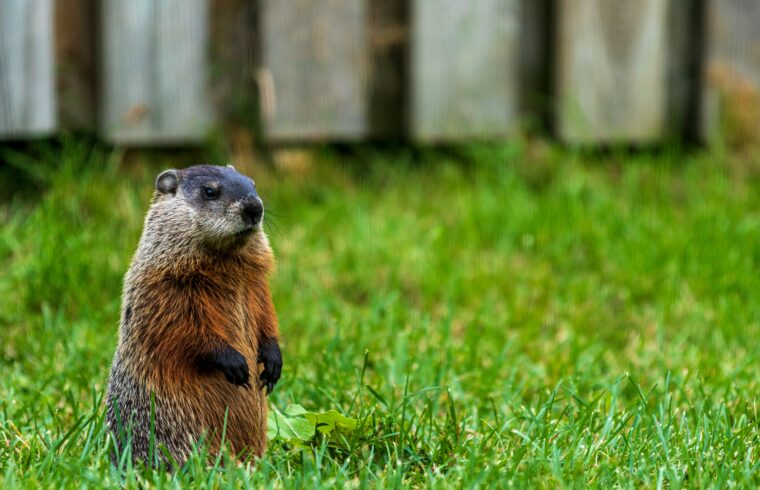
And then, a few days later, I caught him. Not a deer, but a brazen groundhog standing on his hind legs, munching his way through my third potted plant. We locked eyes in a silent showdown. I started shouting at him, “I’ve been blaming the poor deer, and it was you all along!”—as if that would make a difference. He waddled off and dove into a hole right at the foot of the big crucifix in our yard. I yelled after him, “Jesus isn’t going to save your furry behind!” (Not my finest moment.)
Suddenly, I’m deep into Google: “How to groundhog-proof your garden.” “How to evict groundhogs.” “Is there a humane way to get rid of them?” (There is — which my Office Manager all of a sudden becoming a member of the humane society insisted I needed to use – for a small fortune, a company called Fur Patrol trapped and relocated them. They also caught three skunks in the process. Which only took care of the problem for not even 3 months)
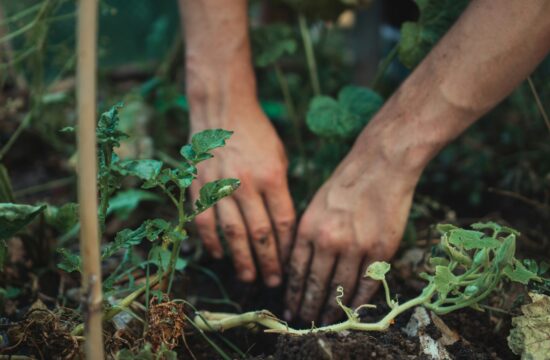
What I learned from all of this—besides the fact that wildlife is smarter than I am—is a new appreciation for just how much care goes into even the smallest garden. You can’t just buy a plant and hope for the best. You have to pay attention: sun, water, fertilizer. You have to protect them from the critters. You have to watch the weather. Vigilance matters.
And that’s exactly what Jesus is getting at with this parable. The seed is the Word of God. The soil is us. Are we really paying attention to the gift we’ve been given? Are we vigilant, mindful, protective of that seed of faith?
It’s so easy, reading this Gospel, to look at everyone else: “Oh, that’s my friend who used to come to Mass but drifted away. That’s my cousin who left the Church and now says she’s Buddhist.” We start sorting everyone into categories—rocky soil, thorny ground, good earth. But here’s the thing: Jesus isn’t handing out labels to make us feel holier than thou. He’s speaking to each of us, right here, right now, about the state of our own hearts.
Mass is a community thing, sure—but each of us meets Jesus personally, too. He’s challenging us: How’s your soil? Are you even paying attention to what’s being planted? Are you letting faith take root, or just assuming you’re “good” because you showed up?
I’ll admit, even as a priest, I catch myself thinking, “Hey, I’m ordained, so my faith must be producing fruit, right?” But if I’m honest, I see rocky patches. I see weeds. There are places in my life that need healing, places where I’m anxious, places where I’m far from peaceful. (And apparently, I have a borderline unhealthy obsession with wildlife.)
But here’s the good news: Jesus loves us—right in our mess, not in spite of it. He wants us to experience that love, every day, in every situation. So when he tells this story, he isn’t asking us to judge others. He’s inviting us to be honest about our own hearts: Are we guarding our relationship with him, or letting anxieties and distractions crowd him out?
I know when I get sucked into the endless news cycle, it never brings me peace. Arguing about politics, doomscrolling through headlines—it never leaves me feeling more like Christ. I’ve started cutting back, swapping some of that time for prayer, spiritual reading, or watching “The Chosen.” Even just praying the rosary in the car instead of listening to talk radio helps me protect that space for God in my life.
And yeah, sometimes the lure of “more” tugs at me, too. Amazon’s “recommended for you” section is a trap. Sale emails make me feel like I’m missing out. But I’ve learned to pause, to wait a day or two before buying something, and ask myself, “Do I really need this?” It helps keep my focus on what really matters.
Maybe the hardest question: Am I willing to be “unpopular” for standing with Christ? The world is loud. People chant and post and demand you agree. But am I willing to dig deeper, to hold fast to the truth that my identity isn’t in my job, my politics, my ethnicity, or anything else—but in being a beloved child of God? That’s what gives every person dignity. That’s what matters most.
Jesus is inviting each of us to a deeper relationship with him. Faith isn’t a ready-made potted plant you just set and forget. It’s a seed you’re responsible for. It needs your attention, your care, your protection. The beauty is, the more you tend it, the more it grows—sometimes in ways you never expected.
Blessed are we if we have eyes and ears open, hearts attentive, and hands ready to nurture this gift God has given us. Let’s not take it for granted. Let’s make our lives good soil.







Love it!
Excellent homily and yes this reading made me step back and ask myself where am I and where I want to be “on the good soil. “.
PS I have found spraying black pepper around my home has kept the raccoons and ground hogs away from my garden. It’s a constant since once it rains it goes away but it does keep those fury critters away.