There are certain books from childhood that somehow stick with you. I can barely remember books I read a couple of years ago, but I can still tell you all about The Monster at the End of This Book (spoiler alert, it was Grover from Sesame Street) or – The Giant Jam Sandwich – a town’s rather creative solution to a wasp infestation; and one book that has always stayed with me: The Giving Tree. Some of you might know this one, as it has been on lists of influential Childrens books and the shelves of many since it was first published in 1964.
Thank you for taking the time to read this homily for the 27th Sunday in Ordinary Time — October 4, 2026.
I’m always grateful for those who return each week, and if something speaks to you,
please share these reflections with friends, family members, and others through social media.
Follow Fr. Jim Chern’s Homilies on Apple Podcasts so the new homily is waiting for you every Sunday HERE or on SoundCloud HERE
Thank you for being part of this ministry and for helping these homilies reach far beyond the place where they are first preached.. Sincerely in Christ -Father Jim
It’s the story of a boy and a tree. When the boy is little, he loves the tree. He climbs her trunk. He swings from her branches. He eats her apples. He rests in her shade. And the tree loves the boy. But the boy grows older. And eventually he doesn’t come around just because he loves being with the tree anymore. He comes because he wants something. He wants money. So the tree says, “Take my apples and sell them.” And he does. Then he disappears for years. Eventually he comes back and says he needs a house. So the tree says, “Take my branches.” And he cuts them off. Then he disappears again. Years later he comes back because he wants a boat — he wants to get away from everything — and the tree says, “Take my trunk.” So he cuts down the trunk. Eventually there’s almost nothing left except a stump. And when the boy finally returns as an old man, tired and worn down, the tree tells him she has nothing left to give him except a place to sit. So he sits. And the book ends: “And the tree was happy.”
Even as a little kid, there was something about that story that bothered me. I understood that the tree loved the boy. I understood that she found joy in giving herself to him. But I remember asking my mother: Why doesn’t the boy ever say thank you? It was a question that never went away. Why doesn’t he ever seem to recognize what this tree has done for him? At some point, he stops loving the tree and starts using the tree. He just assumes: The tree will be there. The tree will give me what I need. The tree will take care of me. I can disappear for years, come back when I want something, take what I need — and leave again.
Strangely enough, that childhood story came back to me praying with today’s readings.
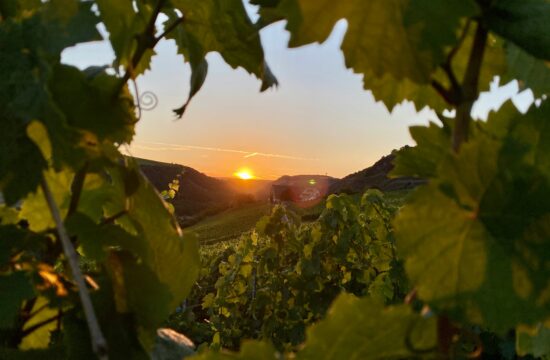
Because both Isaiah and Jesus tell us about something else that has been loved, cared for, cultivated, protected and given everything it needs: a vineyard. For the last couple of weeks we’ve been hearing Jesus tell parables about vineyards – with today being kind of the “finale” of this theme. In fact, Jesus is deliberately echoing the passage we just heard in the first reading from the Prophet Isaiah: Isaiah says: “My friend had a vineyard on a fertile hillside.” And listen to everything the owner does. He spades the soil. Clears away the stones. Plants the choicest vines. Builds a watchtower. Even carves out a wine press. In other words: He thinks of everything. Everything this vineyard needs in order to flourish, he provides. And then comes this heartbreaking question from God: “What more was there to do for my vineyard that I had not done?”
Think about who Isaiah is speaking to. The vineyard is Israel. This is a people God had freed from slavery in Egypt. A people He had fed in the desert. Guided through the wilderness. Brought into a land of their own. A people to whom He had given the Law, the Temple, the priesthood — and one prophet after another whenever they wandered away. After all of that: “What more was there to do for my vineyard that I had not done?”
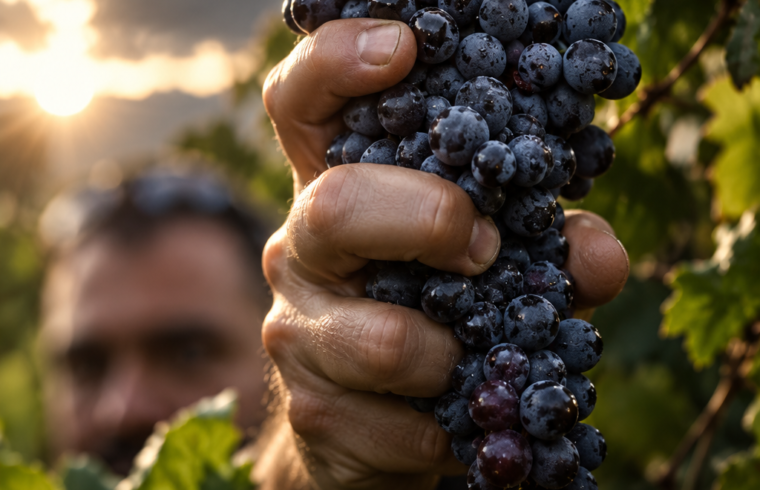
Yet when God goes looking for good grapes, Isaiah says the vineyard produces wild grapes. In other words, bitter fruit – that is useless. And that’s what makes it tragic. These wild grapes aren’t the result of a neglected vineyard. This vineyard has been given everything.
Then Jesus takes that image and pushes it even further. Again there’s a vineyard.
Again the owner has done all the work. He plants it. Puts a hedge around it. Digs the wine press. Builds the tower. And then he leases the vineyard to tenants.
Notice that. They are tenants. They didn’t plant the vineyard. They didn’t build the tower. They didn’t dig the wine press. They didn’t create any of it. They received it.
They were entrusted with it. And when harvest time comes, the owner sends servants to collect the produce that belongs to him. The tenants beat one. Kill another. Stone another. So finally the owner sends his son, thinking: “They will respect my son.”
Instead they say: “This is the heir. Come, let us kill him and acquire his inheritance.” And that’s the moment when you realize how far gone these tenants have become. They’ve forgotten something very basic: The vineyard doesn’t belong to them. They’ve lived there for so long… benefited from it for so long… worked it for so long… that eventually they start acting like it’s theirs. And essentially they say: We want the vineyard. We just don’t want the Owner. We want everything He has given us. We just don’t want Him having any claim on it.
That connects with something I talked about last Sunday that I was surprised caught a few people off guard. The Catholic tradition calls it presumption. Last week we talked about how presumption assumes that because God is merciful, conversion doesn’t really matter.
But today’s readings take that danger one step further. Presumption can move from ‘God is love, God is merciful, God understands’ to an even more disastrous temptation: we begin living as though the vineyard belongs to us. Our lives are gifts. They are entrusted to us. And that is almost the exact opposite of one of the strongest messages our culture gives us.
Because we’re constantly told: It’s your life. Your body. Your time. Your money. Your gifts. Your relationships. Your sexuality. Your career. Your future. Your decisions. And therefore: Do whatever you want with them.
But Christianity makes a much more radical claim. It says: None of it is really mine. It’s been entrusted to me. My life is a gift. My body is a gift. My talents are gifts. The people I love are gifts. My opportunities are gifts. My time is a gift. My vocation is a gift. Even my faith itself is a gift. I didn’t create the vineyard. I woke up one day and found myself standing in it. So the question isn’t simply: “What do I want to do with my vineyard?” The question is: “Lord, what did You entrust this to me for?”
That’s very different.
Because here’s the temptation. We can go to Mass. We can wear the cross. We can know the faith. We can receive the sacraments. And those things are genuinely good. They’re gifts. But we can slowly begin treating them as though they’re some kind of spiritual currency – proof that we’ve done our part – and therefore God should pretty much leave the rest of our lives alone. And slowly we start translating that into: This is my life. My plans. My body. My relationships. My money. My sexuality. My career. My future. My decisions. And God is welcome to bless all of it. But He better not interfere with any of it.
And at that point, we’re basically saying what the tenants said: We want the vineyard. We just don’t want the Owner.
Which is why there’s another word that keeps appearing in today’s readings:
fruit.
Isaiah says God went looking for fruit. Jesus says the owner sends his servants at harvest time looking for fruit. And at the end of the Gospel Jesus says: “The Kingdom of God will be taken away from you and given to a people that will produce its fruit.”
That can sound threatening if we hear it the wrong way. It can sound like Jesus is saying: “Produce enough good deeds and maybe God will love you.” That’s not Christianity. You don’t earn God’s love. You already have it. The vineyard exists because the owner loved it enough to plant it. The vineyard has everything it needs because the owner provided it. The tenants didn’t create any of it. They received it.
That’s grace. Grace always comes first. God loved us first. Jesus died for us while we were sinners. We didn’t earn Baptism. We didn’t earn the Eucharist. We didn’t earn forgiveness. We didn’t earn the Cross.
But here’s the other half of it: Grace is not supposed to leave us unchanged. Grace produces fruit. Love produces fruit. Mercy produces fruit.
If God forgives me, His mercy should gradually make me more merciful.
If Christ feeds me with His Body and Blood, my life should gradually begin to look more like His.
If the Holy Spirit dwells in me, there should gradually be some evidence of His presence: Patience… Generosity… Chastity… Courage… Humility… Compassion… Truthfulness… Love. Not perfectly. Not overnight. But something should be growing.
The fruit doesn’t earn God’s love. The fruit reveals what His love is doing in us.
That’s ultimately the question of today’s Gospel:
What’s growing?
What is all this grace producing in me? Because it’s possible to spend your whole life around the things of God and still resist God Himself. That’s exactly what happened to the tenants. They’re living in the vineyard. They’re surrounded by the owner’s generosity. They’re benefiting every single day from everything he built. And somehow they have convinced themselves: It’s ours.
That’s where the children’s story of The Giving Tree starts making sense in a different way. The problem with the boy isn’t that the tree gives too much. The problem is that he becomes so accustomed to receiving that he stops recognizing anything as a gift. The apples become something he’s entitled to. The branches become something he’s entitled to. The trunk becomes something he’s entitled to. Even the stump becomes something he’s entitled to. He keeps receiving. And receiving. And receiving. But he never seems to ask: What should all this generosity produce in me? How should I respond to this much selfless love?
And one of the ways presumption takes root in our spiritual lives is the same way: We stop noticing. We stop noticing the vineyard. We stop noticing what God has done. We stop remembering the cost of everything we’ve received.
That’s why I think St. Paul’s words in that second reading fit so beautifully.
Because Paul says: Whatever is true, whatever is honorable, whatever is just, whatever is pure, whatever is lovely, whatever is gracious — think about these things. In other words, Paul is calling us to pay attention. Look again. Notice what is good. Notice what is true. Notice what is beautiful. Notice what God has done. Because gratitude begins with paying attention.
But then Paul doesn’t stop there. He says: “Keep on doing what you have learned and received and heard.” Not merely: Think about it. Not just: Believe it. Do it. Let what you have received become visible in the way you live.
Which is why perhaps the question to bring into prayer this week isn’t simply: “Am I Catholic?” Or even: “Do I believe in God?” Those are important questions. But today’s Scriptures push deeper. The question becomes: What difference does it make that I belong to Jesus Christ? Where can I point in my life and say: That’s different because of Him.
I forgave that person because of Jesus. I walked away from that temptation because of Jesus. I finally went to confession because of Jesus. I apologized because of Jesus. I stopped making excuses because of Jesus. I became more generous because of Jesus. I changed the way I treat people because of Jesus. I changed my mind because Jesus told me I was wrong. I gave up something I wanted because I realized it wasn’t what God wanted.
That’s fruit.
And maybe there are some other places where we need to admit: Lord… You’ve given me everything I need. You’ve been unbelievably generous with me. But somewhere along the way… I’ve started living as though the vineyard belongs to me.
And that’s where the good news comes in. Because Jesus isn’t telling this parable simply to condemn us. He’s telling it while there’s still time to change. The Son has come into the vineyard. Jesus Christ is here. At every Mass, He gives Himself to us again. Not apples. Not branches. Not a trunk. His Body. His Blood. His soul. His divinity. His very life.
Unlike the boy in The Giving Tree, the proper response isn’t simply to come forward, receive another gift — and walk away. Maybe today we stop. We look at the Cross. We look at the Eucharist. We look at everything He has already given us.
And instead of treating God as someone I turn to only when I need something, maybe today we pray: ‘Lord, You’ve given me everything. What do You want my life to become?’ Because God doesn’t simply want us to enjoy the vineyard. He wants the vineyard to bear fruit.
Perhaps that’s the simplest prayer we can offer today:
Jesus, don’t let me take Your mercy for granted.
Don’t let me forget that everything I have is Yours.
And after everything You’ve given me…
make my life the thank you.