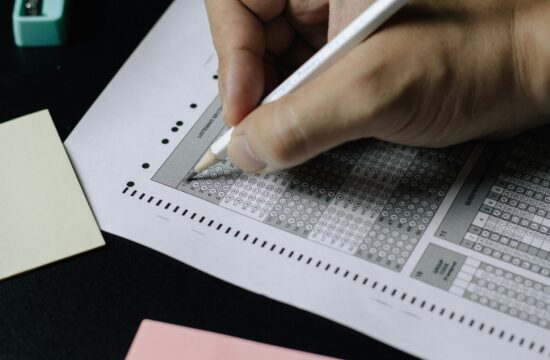
We live in a day and age that gives us the impression that almost everything can be controlled. And in some ways, that is understandable. With a few taps on a screen, we can adjust the temperature in our homes, choose exactly what we want to watch or listen to—without having to leave the couch to rent a videotape or buy a cassette—avoid traffic, order everything from books to groceries, and track the exact moment it will arrive.
Thank you for taking the time to read this homily for the 18th SUNDAY IN ORDINARY TIME -AUGUST 2, 2026 – Your support means a great deal to me, and I’m deeply grateful for the many who share these messages with their friends, families and social media followers. If you’ve found meaning in these words, I’d be grateful if you’d share them with others who might benefit.
And for those who prefer listening, you can find the audio version on SoundCloud HERE or subscribe to the podcast on iTunes HERE. Your comments, messages, and the way you’ve embraced these homilies continue to inspire me. Sincerely in Christ -Father Jim
Or we can skip the groceries altogether and have dinner delivered.
Basically, nearly every waking hour can be navigated from our fingertips. And come to think of it, even our non-waking hours can be tracked, because another tap can tell us how well—or how poorly—we slept.
Yet for all the information and technology available to us, the most important parts of life remain stubbornly beyond our control.
We cannot control how other people see us. We cannot guarantee that someone will love us back, that the opportunity we hoped for will come through, that a relationship will last, that a diagnosis will be good, or that our plans will unfold the way we imagined.
So we plan, calculate, prepare, and try to anticipate every possibility, hoping somehow to make sure everything turns out okay.
But we cannot.
There is a great deal in life that is not within our control.
What is within our control is what we do with what we have been given – and whether we are willing to place it into the hands of Jesus Christ. That is at the heart of today’s Gospel.
Because with this spectacular and very familiar miracle of the loaves and fish, we can easily overlook how it begins. It begins in sadness.
Immediately before this passage, Jesus receives the news that John the Baptist has been killed. John had prepared the people for Jesus. He had pointed to Him and declared, “Behold, the Lamb of God.” He had courageously spoken the truth even when the truth was unpopular and dangerous. And he had been murdered for it.
His death was senseless—the result of lust, pride, resentment, cowardice, and the abuse of power. Herod knew killing John was wrong, but he cared more about saving face in front of his guests than doing what was right.
When Jesus hears what has happened, Saint Matthew tells us that He withdraws in a boat to a deserted place by Himself.
John was not simply a prophetic voice preparing people for Jesus. John was His cousin. Jesus loved him. So Jesus wants silence. He wants to grieve. He wants to be alone with His Father. That detail matters because it reminds us that Jesus is not distant from human pain. He knows what it is to lose someone. He knows what it is to receive devastating news.
But when He arrives, the deserted place is no longer deserted.
The crowds have followed Him.
Jesus is carrying His own grief. He would have every reason to say, “Not today. I need some time.”
Instead, Matthew tells us, “When he disembarked and saw the vast crowd, his heart was moved with pity for them, and he cured their sick.” Their suffering touches Him. Their wounds matter to Him. Their hunger becomes personal to Him.
That is the first thing we need to hear today:
Jesus sees us.
He sees the anxiety behind the smile, the loneliness beneath the busy schedule, the burden carried in silence, and the person trying to remain faithful while wondering whether God is doing anything at all.
Jesus does not merely see a crowd. He sees individual people.
As evening approaches, the disciples come to Him with a perfectly reasonable suggestion: “This is a deserted place and it is already late; dismiss the crowds so that they can go to the villages and buy food for themselves.” They see a genuine problem. There are thousands of people. It is getting late. There is no food. Their solution is practical: send everyone away.
But Jesus responds, “There is no need for them to go away; give them some food yourselves.” The disciples answer, “Five loaves and two fish are all we have here.”
“All we have.”
They see the size of the crowd and the small amount of food. They see everything they lack.
And according to their calculations, what they have is not enough.
We know that feeling. We look at the responsibilities in front of us and think: “I do not have enough time.”“I do not have enough patience.” “My faith is not strong enough.” “I am not enough.”
Sometimes we convince ourselves that because we cannot do everything, we cannot do anything. But Jesus never asks the disciples to solve the entire problem by themselves. He simply says, “Bring them here to me.”
That may be the most important sentence in this entire passage.
Bring them here to me.
Jesus does not shame them for their limitations. He does not tell them to create what they do not have. He asks them to surrender what they do have so that He can accomplish what they cannot. That is where the miracle begins. It does not begin when the disciples finally have enough. It begins when they place what they have into the hands of Jesus.
That is His invitation to us as well.
Bring Him your limited time, your imperfect gifts, your uncertainty about the future, the relationship you cannot repair, the grief you cannot overcome, the prayer you struggle to say, and the faith that sometimes feels small. Bring it to Him.
The disciples could not control the size of the crowd. They could not change the location or the hour. They could not produce enough food.
But they could decide whether to trust Jesus.
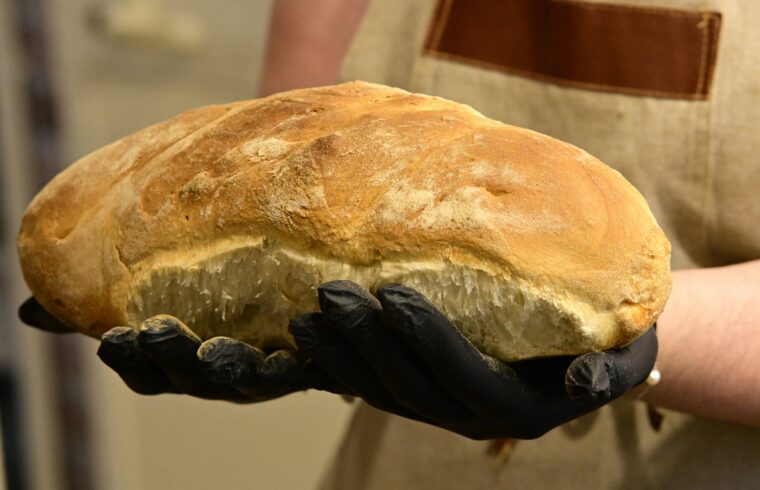
Jesus takes the loaves, looks up to heaven, says the blessing, breaks them, and gives them to the disciples.
He took.
He blessed.
He broke.
He gave.
Those actions should sound familiar because this miracle points us toward the Eucharist. At every Mass, ordinary bread and wine are brought forward. Yet through the words of Christ and the power of the Holy Spirit, they become the Body and Blood of Jesus Christ.
The same Jesus who fed the crowd in the wilderness continues to feed His people today. Because our deepest hunger cannot be satisfied by success, money, attention, entertainment, achievement, or approval.
Those things may be good, but they cannot answer the deepest questions of the human heart: Am I loved? Does my life matter? Can I be forgiven? Is there hope beyond death?
That is why in the first reading the Lord says through Isaiah: “All you who are thirsty, come to the water! You who have no money, come, receive grain and eat.” God does not say, “Come when you have earned it. Come when you have everything figured out. Come when you are finally worthy.” He simply says, “Come.” Come hungry. Come thirsty. Come aware that you cannot provide everything you need for yourself.
The world tells us to be self-sufficient: protect your image, prove your value, and never let anyone see you struggle.
The Gospel reminds us that we are creatures, not the Creator. We are limited. We hunger. And we are invited to bring that hunger to the One who can satisfy it.
After everyone has eaten, the disciples gather twelve baskets of fragments. They began convinced that they did not have enough. They end with more than they started with.
That does not mean faith guarantees everything will turn out exactly the way we want. Faith is not a method for controlling God. The miracle reveals something deeper.
The disciples saw scarcity. Jesus saw abundance.
The disciples saw a problem that needed to be sent away. Jesus saw people who needed to be fed.
The disciples saw five loaves and two fish.
Jesus saw the beginning of a feast.
We often assume that everything depends upon us. If we cannot see a solution, we think there must not be one. If what we have seems insufficient, we conclude that nothing can be done.
But the Gospel does not ask us to pretend that five loaves are enough to feed thousands.
The Gospel asks us to remember whose hands they are in. That is why Saint Paul can speak so boldly in the second reading: “What will separate us from the love of Christ?” Anguish? Distress? Persecution? Famine? Peril? The sword? Paul does not say faithful people will never suffer. Most of the things on that list were things he himself experienced.
He says that none of them can separate us from Christ.
“For I am convinced,” he writes, “that neither death, nor life, nor present things, nor future things… will be able to separate us from the love of God in Christ Jesus our Lord.”
Not present things.
Not future things.
So much of our anxiety comes from those two places. We become overwhelmed by the present and afraid of the future. Saint Paul does not tell us that we will control the present or predict the future. He tells us that neither can separate us from the love of God.
That is the foundation of Christian hope.
We cannot guarantee that every plan will succeed. We cannot control what other people decide, what tomorrow will bring, or how every chapter of our lives will unfold.
But we know who will be with us. And so perhaps the most important question is not, “How can I gain control of everything in my life?” Perhaps the better question is: “What am I still afraid to place into the hands of Jesus?”
What are your five loaves and two fish? Maybe it is your future. Maybe it is your marriage or your family. Maybe it is a relationship you cannot repair, a regret you cannot undo, a diagnosis you cannot change, or a prayer that still seems unanswered. Maybe it is the fear that you do not have enough. Maybe it is the fear that you are not enough. Maybe it is simply yourself.
Whatever it is, Jesus says the same thing to us that He said to the disciples: “Bring it here to me.”
He does not ask you to feed the entire crowd. He does not ask you to solve every problem. He does not ask you to perform the miracle. He asks you to place into His hands what you have.
Because the miracle was never about the greatness of the gift. It was about the hands into which the gift was placed. And in a few moments, those same hands will feed us.
The One who took the bread, blessed it, broke it, and gave it to the crowds will give us something even greater—not merely bread for the body, but His own Body and Blood.
He does not simply give us something. He gives us Himself. So when you come forward today, bring Him what you cannot fix. Bring Him what you cannot understand. Bring Him what you cannot control. Bring Him what you have. Bring Him what you lack. Bring Him yourself.
And then trust the hands into which you have placed it.
Because whatever comes next—whatever comes in the present, whatever waits in the future, even death itself—nothing can take you out of those hands.
Nothing can separate you from the love of God in Christ Jesus our Lord.