There are certain names that, the moment you hear them, you immediately know what they’re known for: Thomas Edison—the lightbulb. Frank Sinatra—the voice. George Washington—the founding of our nation. These are people the world calls “great” because of what they did. Their very names have almost become shorthand for achievement. Their legacies are measurable, epic, and obvious.
Thank you for taking the time to read this homily for DIVINE MERCY SUNDAY – SECOND SUNDAY OF EASTER – APRIL 12, 2026 – Your support means a great deal to me, and I’m deeply grateful for the many who share these messages with their friends, families and social media followers. If you’ve found meaning in these words, I’d be grateful if you’d share them with others who might benefit.
And for those who prefer listening, you can find the audio version on SoundCloud HERE or subscribe to the podcast on iTunes HERE. Your comments, messages, and the way you’ve embraced these homilies continue to inspire me. Sincerely in Christ -Father Jim
That’s how the world works: your resume, your GPA, your accomplishments, your highlights. The message is simple: Be someone special. And “special” means doing something extraordinary that everyone else notices. But here’s the problem. That’s dangerous. Because it quietly teaches us something false: that your worth is determined by what you achieve. And if you don’t achieve enough? You’re nothing special.
It’s not that striving to do well is a bad thing—it’s actually good to develop the gifts God has given us. But too often, that truth gets twisted. Instead of forming us, it starts to define us. And for so many of us who don’t hit those unrealistic expectations, the message we end up hearing is: you’re no one special.
That came to mind when I looked at the calendar and remembered that this Second Sunday of Easter is “Divine Mercy Sunday.” The saint at the heart of this celebration is St. Faustina, who first revealed this particular message of Jesus’ Divine Mercy to the Church. When Faustina first entered religious life, she didn’t stand out. She wasn’t well-educated. She struggled. She seemed quiet and serious. One of the superiors said, “She’s not for us.” Another, even more bluntly: “No one special.”
That “no one special” would become the apostle of Divine Mercy. Her diary has touched millions, including Pope St. John Paul II. Her vision of Jesus—rays of mercy pouring from His heart—has become one of the most recognized images of Christ in the world. The superiors got it wrong. God got it perfectly right.
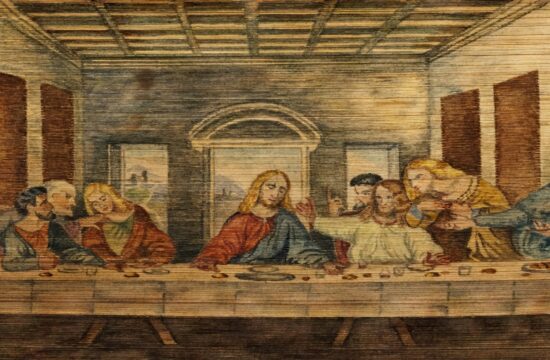
Because that’s how God works. Over and over again. Look at the apostles. When we meet them in the Gospels, they’re not spiritual giants, not noteworthy in any way. Simon is introduced as a fisherman. James and John—the sons of Zebedee. Matthew—a tax collector, considered a traitor by his own people. In the eyes of the world: forgettable. Ordinary. Unremarkable.
And in today’s Gospel—even though we’re celebrating the Second Sunday of Easter, this scene takes place on Easter Sunday itself—where do we find them? In a locked room, afraid, confused, hiding. Not exactly a heroic moment. These are not the kinds of people you would expect to change the world.
And yet. Jesus enters that locked room—not because they earned it, deserved it, or had it all together. He just shows up. And the first words out of His mouth aren’t disappointment or frustration: “What happened to you? Where were you? How could I ever trust you?” No. He says, “Peace be with you,” and breathes the Holy Spirit on them. In that moment, everything changes.
We gotta let that sink in. The people the world would call “no one special” become the foundational pillars of the Church. Not because of what they did. But because they followed Jesus, they stayed with Him, and when they failed, they let Jesus meet them in that place. Ultimately, it was because of what they let Jesus with and in and through them.
Then there’s Thomas. Every year, I have to say it: he’s unfairly labeled “Doubting Thomas” just because he missed one Sunday. Imagine—your whole identity reduced to missing one Mass! But Thomas is just honest. “Unless I see… unless I touch… I’m not buying this.” He’s speaking from a place of pain and disappointment—at himself, at the others, at what happened to Jesus. I don’t think he’s being difficult. I think his grief from Good Friday has left him shaken to the point of disbelief. Even if Jesus has risen, why would He want to be with these men who’ve already proven they are, indeed, no one special?
And what does Jesus do? He shows up. Again. This time, specifically for Thomas. “Put your finger here. See my hands.” Jesus isn’t afraid of Thomas’s doubt. He’s not put off by his questions. He isn’t waiting for perfection. And in response, Thomas—the “no one special” doubter—becomes the one who makes one of the most definitive and profound declarations in all of Scripture: “My Lord and my God.”
That’s the gift. What becomes possible when we stop living by the world’s standards and truly open ourselves—honestly, vulnerably—to Jesus. Because it’s not about what we bring to the table, but what He does with each of us.
The Acts of the Apostles describes the early Church so simply: “They devoted themselves… they shared everything… they ate together… they had joy… and the Lord added to their number.” This wasn’t a group of superstars. It was ordinary people living differently. And the same world that judged and dismissed them individually as “no one special” soon found itself captivated by what came out of this Church. So much so that the Church would outlast Jerusalem, outlast Rome.
St. Peter, that simple fisherman turned follower, called to be the first Pope, and even a denier of Christ in His hour of need, says something remarkable in that second reading: “By His great mercy we have been born anew to a living hope through the Resurrection of Jesus Christ from the dead.” Our struggles, our doubts, our ordinariness don’t disqualify us—they’re the raw materials God uses.
So here’s the question: What are you going to be known for? And I don’t mean your resume, your transcripts, your accolades. When someone looks closely at your life, would they see the difference Jesus has made? We have to shift from desperately wanting attention from the world, to wanting to be someone God can use. Because those are not the same thing.
We can name Thomas Edison because he invented something. We can name Frank Sinatra because of his voice. We can name George Washington because of his leadership.
But why do we remember the apostles? Not because of what they accomplished on their own. But because they encountered Jesus—and they let that encounter change them.
The same is true for St. Faustina. “No one special,” her superiors decided. But she said “Yes” to Jesus. And through her, the message of Divine Mercy spread to the entire world. Not because she was extraordinary, but because she trusted in an extraordinary God.
That’s the invitation this Sunday—Divine Mercy Sunday. It’s not about proving ourselves or becoming impressive. It’s about letting ourselves be found. Even in our doubts, even in our fears, even in our ordinariness. Because Jesus still walks into locked rooms—the locked room of your anxiety, your past, your questions. And He says the same thing He said over 2,000 years ago: “Peace be with you.”
But here’s what matters even more. After He says that, He sends them: “As the Father has sent me, so I send you.” Yes—them. The scared ones, the doubting ones, the ordinary ones. Because that’s how God works.
And He still does. He’s asking you to let Him meet you where you are. He wants to bring His peace into your mess. He wants to use you, and your life. Because history is full of people the world called “no one special” who changed everything because they said yes to God.
And maybe—just maybe—the next one on that list is sitting here right now.
“Blessed are those who have not seen and have believed.” That’s us. Not because we’re perfect. But because we’re here. Still searching. Still hoping. Still open.
Stop trying to be someone the world notices. Be someone Jesus can find. Because that changes everything.