Homily – Tuesday of Holy Week – (John 13:21-33, 36-38)
There’s an unforgettable scene in the movie “A Few Good Men.” Jack Nicholson, playing this brash colonel, shouts at Tom Cruise playing an attorney in this climactic courtroom scene: “You want the truth? You can’t handle the truth!” Nicholson’s character is so arrogant, almost unbearable — and somehow, he’s right.
The truths that cut deepest, the ones buried in the corners of our hearts, are often the hardest to face. We dodge them, ignore them, pretend they aren’t there.
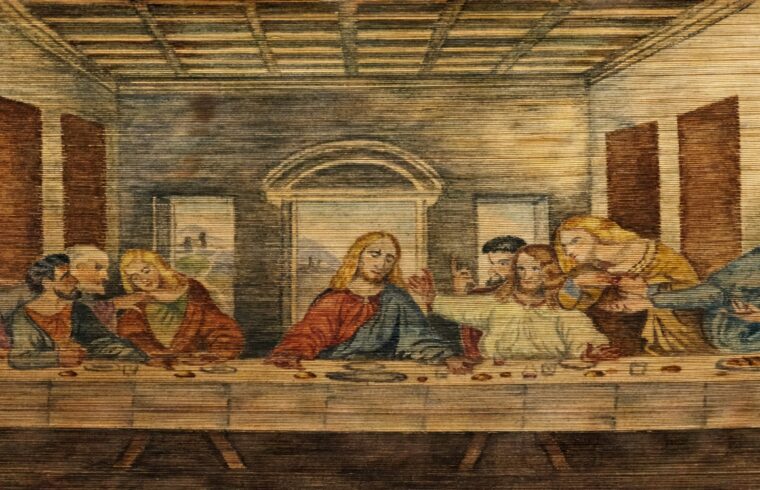
That’s what’s so unsettling about today’s Gospel as we take another step further in Holy Week. It’s not just the obvious part about Simon Peter. Where in that upper room, during the Last Supper, Jesus finally tells His closest friends: “Where I am going, you cannot follow — not yet.” And Peter, always eager, always trying to prove himself, jumps in. He wants so badly to be brave and loyal, to be the one Jesus can count on. But in his zeal, he misses something: there are cracks beneath the surface. Weaknesses, vulnerabilities, that Jesus sees and names before Peter even knows they’re there.
But there’s another layer here — the rest of the disciples. After Jesus reveals that one of them will betray Him, the room goes tense with fear and disbelief. Peter nudges John to ask who it is. And Jesus doesn’t say “none of your business” or “you’ll see.” He makes it clear that it’s Judas. Yet somehow, it’s as if no one can take it in.
John doesn’t speak up.
The others don’t react.
Maybe they just couldn’t handle the truth.
Judas? One of us?
We know the story’s ending, so we’re quick to cast Judas as the villain. But the truth is more complex, and more painful. Judas, like the others, was called by Jesus. He saw miracles, heard the parables, shared in the bread and wine. He wasn’t a stranger to grace.
But there were places in his heart he wouldn’t surrender: his ambition, his stubbornness, his own sense of how things should go. Maybe he wanted to follow Jesus — but only on his terms. Maybe, deep down, he hoped to shape Jesus, rather than be shaped by Him.
That’s the truth Judas couldn’t face.
And maybe, it’s the truth the others couldn’t bear to imagine — that even after everything, betrayal, denial, failure were still possible. Not just for Judas, but for any of them.
And that’s what Holy Week lays before us.
The uncomfortable reality that these same struggles live in us, too. We’re not invited here to wallow in guilt or shame, but to remember the rest of the story: Jesus shines His light not to condemn, but to call us forward, to repentance. Not the kind that leaves us stuck in regret, but the kind that lets our hearts change.
He invites us to bring Him the hardest truths. The ones we’d rather keep hidden. The ones we’re afraid to even name. Because in those places — the places we can barely handle ourselves — He is already waiting, ready to walk with us into the light.