A few years ago, I made a rule for myself: no more than about twenty minutes of news a day. It was during a time when every headline seemed more dramatic than the last—pandemic, politics, riots, you name it. The experience revealed something about myself—and maybe about a lot of us. If I’m not careful, I start scrolling through headlines or social media, and before I know it, twenty minutes turn into forty, which turns into an hour, which turns into an embarrassingly long time. And the strange thing is, you never feel better afterward. You start by checking one headline. Then another. Then another. Pretty soon, you’ve gone from reading about current events to the collapse of civilization by Tuesday afternoon. And hopefully, you can stop yourself and ask, “How did I end up here?
Thank you for taking the time to read this homily for FOURTH SUNDAY OF LENT – MARCH 15, 2026 – Your support means a great deal to me, and I’m deeply grateful for the many who share these messages with their friends, families and social media followers. If you’ve found meaning in these words, I’d be grateful if you’d share them with others who might benefit.
And for those who prefer listening, you can find the audio version on SoundCloud HERE or subscribe to the podcast on iTunes HERE. Your comments, messages, and the way you’ve embraced these homilies continue to inspire me. Sincerely in Christ -Father Jim
Sociologists call it doom-scrolling. And everyone from the personalities to the platforms they’re on have designed it this way on purpose. Fear keeps people clicking. Outrage keeps people sharing. Anxiety keeps people watching. Which means if we’re not careful, you can be glued to your phone or devices convinced the world is coming apart at the seams.
But the reality is the more we stare at those screens – the less clearly we start to see the world. We call it being informed. But sometimes it’s just another form of blindness. That’s why I had made the rule of 20 (maybe 30) minutes a day and then I turn it off. Most days I‘m pretty disciplined about it. But one night this week I had the TV on in the background while I was doing some chores. I wasn’t really paying attention, until suddenly I was. Another panel of commentators talking about the possibility of a wider war…another expert speculating about what might happen next… another interview with people describing how anxious everyone is about the future. And before I knew it, an hour had pased. And something else happened too. My mood had completely changed. I started feelng anxious…frustrated… discouraged. Then I did what most of us do – I stared clicking. One article led to another. One video led to another. And the internet being the internet kept supplying another 10 suggestions on the other side. At some point, since the computer tracks everything, I started getting religious takes on everything which was even more disturbing from predictions of end times to assertions this is God’s punishment on the world… or proof that dark spiritual forces are in control of everything.
That’s when I said “get behind me Satan…” (That’s the homily version of what I said in my anger and disgust). Because in all seriousness – that moment is what snapped me out of the doom spiral. It forced me to ask a very simple question – Are we Christians or not? Do we actually believe in Jesus Christ and who He is – or have we quietly turned Him into something else?
For a lot of people—even those who say they’re Christian—Jesus has slowly become something like a life insurance policy. Something important, something you need, but not something you want to deal with on a daily basis. Just pay your premiums, file Him away for emergencies, and hope you never actually need Him.
But is that all faith is? What would it look like if we let Jesus be the center instead of the backup plan? What if we got honest about the parts of our lives where we’re still blind, still stuck, still afraid to bring Him in?
Maybe the reason so many of us keep Jesus on the sidelines is because we’ve forgotten who He actually is So—who is Jesus, really? Who is this person we say we believe in, but so often keep at arm’s length?
A while back when I was following the Bible in a Year podcast, I started collecting every title of Jesus I could find…Which before long turned into over 50… which, don’t panic, I’m not going to go through all 50. But just listen to a few of things Scripture calls Jesus:
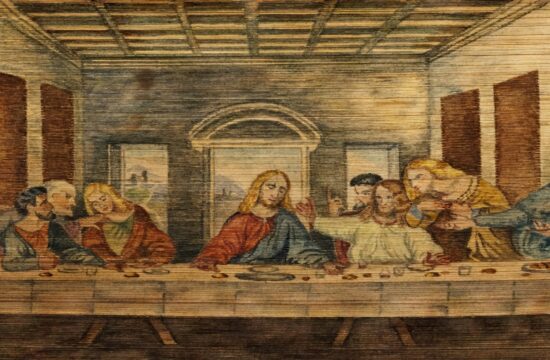
The Alpha and the Omega- the beginning and the end… The Lamb of God who takes away the sins of the World… The Good Shepherd who lays down His life for His sheep… the Light of the World shining in the darkness… the Way, the Truth and the Life… The Bread of Life… The King of Kings and Lord of Lords… the Resurrection and the Life…. The Prince of Peace.
This is who Jesus is. This is who we follow. This is who we say we believe in. And when we remember who He actually is – something begins to happen. Those titles start cutting through the fog of fear the world is trying to engulf us with. Because the center of history is not politics. It’s not the economy. It’s not war.
The center of history is Jesus Christ.
Which brings us to this pivotal moment in the Gospel of John. We hear about a man who was born blind. Let’s enter into the scene. Everyone knew who he was. He wasn’t some stranger who suddenly appeared. His family knew him. His neighbors knew him. The entire community had seen him his entire life. And this one day after a brief encounter with Jesus and instantly, miraculously, he can see.
That leaves just two possibilities: Either this guy faked being blind his entire life waiting for the perfect moment to pull off the greatest hoax in history… or something amazing, incredible, life changing just happened.
What’s fascinating to me sitting with this Gospel passage though is that the miracle itself takes about 5 verses. Five. The rest of this chapter- more than 30 – is all about the reactions. The debates. The experts offering their skepticism and cynicism. The investigations and people interrogating the man, questioning his parents, analyzing every detail searching for any explanation that doesn’t require them to accept what just happened.
Because if Jesus really did this – then everything changes. And that – that is the real issue. It’s not about the miracle – it’s what the miracle meant.
The reality is the world they were living in, it felt chaotic and uncertain too. The Jewish people were under Roman occupation. Political corruption was everywhere. Religious leadership was fractured. People were frustrated and tired and unsure about the future (sound familiar?) But into that Jesus steps in and does something that completely disrupts the assumptions everyone had gotten used to. He restores the sight of a man born blind.
At the very beginning of this story, Jesus had made something very clear. The blindness was not a punishment for sin – not from the guy or his parents. Which means something very important for us too.
God is not sitting in heaven looking for ways to punish the world through pandemics, wars, tragedies or suffering. That’s not who God is. Jesus shows us who God is. He heals – he restores – He forgives. In fact Jesus makes a stunning claim that confounds the crowds. He says the greater miracle isn’t restoring physical sight. The greater miracle is forgiving sin.
Because sin is the blindness that affects every one of us. It clouds our vision. It distorts how we see God. It distorts how we see ourselves. It distorts how we see each other. And Jesus came to heal that blindness . To restore the vision of our souls. That’s what going to confession, the Sacrament of Reconciliation is all about. It’s not just about listing mistakes—it’s Jesus doing for us what He did for the blind man: opening our eyes, healing us, helping us see again. Don’t let fear or anxiety keep you in the dark. Go to confession. Even if it’s been a while—it’s okay. Don’t let fear or embarrassment become the devil’s tool, holding you back from experiencing what it’s like to walk out seeing clearly, heart lighter, vision restored.
In this Gospel we started with one man blind who turns out to be the only one who ends up seeing clearly. Everyone else – the experts, the religious leaders, even his family- they remain blind. Not because they couldn’t see. But because they refused to see. They had already decided what was possible… and who Jesus could be. So when the miracle happened right in front of them – they basically end up rejecting it.
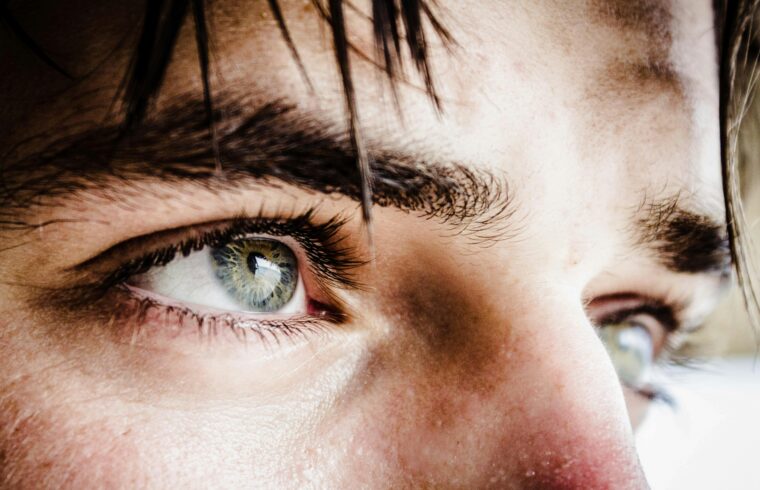
That same choice is in front of us. We can spend our lives staring at everything that makes the world feel dark. Or we can look at the One who is the Light of the World. Because Jesus didn’t just come to give sight to one man two thousand years ago. He came to open our eyes. To see who God really is. To see who we really are. To see that we are not abandoned, nor forgotten, but beloved sons and daughters of the Father.
The world will always offer you a thousand reasons to panic, tune out, or give up. That’s easy. That’s everywhere. But Jesus offers you something harder—and so much better: the chance to really see. So here’s the challenge. This week, don’t just scroll. Don’t just sit in the darkness and call it “being informed.” Step out of the shadows. Risk the light. If you want to see your life—and this world—with brand new eyes, go to confession. Walk in with all the mess, the fear, the things you’d rather keep hidden. Walk out with sight, with peace, with clarity you didn’t know was possible. Because the truth is, the light isn’t lost. It’s not fading. It’s right here, right now, blazing. The only question is: are we willing to open our eyes?