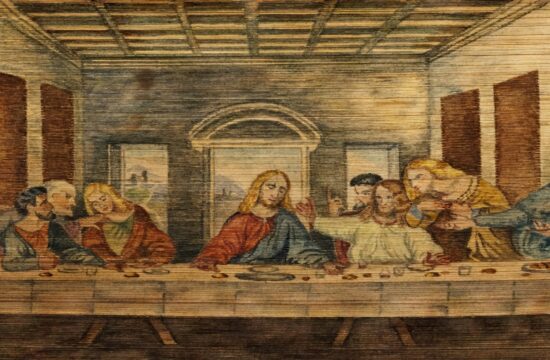
A week ago at Sunday Mass, we started into what many scholars call “the greatest sermon ever given”—the Sermon on the Mount. Jesus opens with some of the most recognizable lines from scripture, the Beatitudes: “Blessed are the poor in spirit. Blessed are those who mourn. Blessed are the meek.”
Recognizable—and if we’re honest, unsettling. Because instinctively, our default reaction to being broke, persecuted, or grieving is that it sure doesn’t feel like a blessing. But Jesus is redefining what it means to be blessed. God isn’t some distant judge handing out prizes to people who already have it together, or cursing those who fall short. No—He’s standing right in the middle of our mess. Blessing us, loving us, working with us, even when we feel like we have nothing to offer. Maybe especially then. We’re blessed when we recognize that reality. Truly blessed.
Thank you for taking the time to read this homily for the FIFTH SUNDAY IN ORDINARY TIME – February 8, 2026 – Your support means a great deal to me, and I’m deeply grateful for the many who share these messages with their friends, families and social media followers. If you’ve found meaning in these words, I’d be grateful if you’d share them with others who might benefit.
And for those who prefer listening, you can find the audio version on SoundCloud HERE or subscribe to the podcast on iTunes HERE. Your comments, messages, and the way you’ve embraced these homilies continue to inspire me. Sincerely in Christ -Father Jim
Today’s readings pick up right there. They ask the next question: Okay, so we’re blessed—now what? What’s this blessing for?
In our first reading, the prophet Isaiah said, “Share your bread with the hungry, shelter the oppressed and the homeless… Then your light shall break forth like the dawn.” In other words, your blessing isn’t just for you. It’s meant to spill over, shine out, change the lives of the people around you.
St. Paul, in the second reading, says, “I came to you in weakness and fear and much trembling.” Paul – The guy who wrote half the New Testament! He’s admitting he was scared, that he didn’t have it all together. And yet—he trusted that God’s power could break through even his weakness.
Then we get to the Gospel. Jesus looks out at the crowd—ordinary people, not experts, not saints, just your average mix of farmers, fishermen, moms, dads, teenagers, people who probably barely managed to get themselves there that day—and he says: “You are the salt of the earth. You are the light of the world.”
At first, it hits like a pep talk—words you stitch on a pillow or post on Instagram. Inspirational thoughts to be moved by. But Jesus isn’t here to just fire people up with motivational sayings.
Notice: He doesn’t say, “Try to be salt. Work hard and maybe you’ll earn the right to shine.” He says, “You are.” Right now. As you are. With all your doubts, your mess, your unfinished business.
For Jesus’ first—greatest—sermon, this second part doesn’t feel any easier than the first. Most of us don’t feel like salt or light. We feel like we’re barely holding it together. Maybe you’re in a season where you feel like you’re just surviving—showing up every day, doing your best, but secretly wondering if you’re failing at everything. Maybe you look at the world and think, “What difference can I possibly make? How am I supposed to be salt and light when half the time I feel like I’m in the dark myself?”
That’s not a selfish question. It’s an honest one. And if you’re thinking that, you’re not alone.
Let me tell you about three college roommates. Let’s call them Iggy, Frank, and Pete. These guys were just… guys. Far from perfect. If you’d met them in school, you wouldn’t have pegged them as future saints.
Iggy—he was the intense one. The kind of friend who had to win every argument, who jumped into every challenge headfirst. He wanted to be famous, to make his mark. The next big thing. But then, out of nowhere, life sideswiped him. He got hurt—really hurt. Suddenly he was stuck in bed, staring at the ceiling, his dreams crashing down around him. The things he’d built his life on—strength, ambition, success—were gone. He felt useless, angry, lost.
Frank—he looked like he had it all. Smart, athletic, popular. The kind of guy everyone wanted to be friends with. But underneath, there was this emptiness, a sense that nothing he achieved was ever enough. Every time he reached one goal, another would pop up. Always running, never arriving.
Pete—he was quieter. Sensitive. The one people sometimes overlooked. He struggled with anxiety before anyone had a word for it. He worried about letting people down, about not measuring up. He felt things deeply. And sometimes, he just felt… out of place.
They had their good days, sure. But each of them carried wounds, just like we do. They were looking for something—meaning, connection, hope.
Here’s where their stories get interesting. When life fell apart, they didn’t just try to muscle through. They didn’t pretend everything was fine. They let themselves ask the hard questions. They started searching—sometimes out of desperation—for something, someone, who could meet them in their pain.
Iggy was bored out of his mind, stuck in bed. Someone handed him a stack of books—some were stories of soldiers and heroes, others were stories of saints and Jesus. At first, he read just to kill time. But he noticed something: every time he read about chasing glory, he felt empty. But when he read about faith, about people who gave everything for God, something inside him shifted. It wasn’t a thunderbolt. It was a slow realization: maybe winning isn’t everything. Maybe there’s a different kind of greatness.
Frank tried to fill the void with more—more success, more friends, more noise. But the emptiness only got louder. Eventually, he had to face the question he’d been running from: “Who am I, really? What am I made for?” It wasn’t an easy process. He wrestled, doubted, fought with God. But in the end, he realized he didn’t have to earn love. It was already being offered.
Pete, with all his worries, found that the more he tried to hide his anxiety from God, the worse it got. It was only when he finally brought his fears to prayer—when he let himself be seen and loved, mess and all—that things started to change. He learned that God wasn’t waiting for him to get it together. God wanted to meet him right in the middle of his struggle.
None of them had a “burning bush moment” conversion. It was slow, messy, real. They helped each other. They argued, supported, and sometimes annoyed each other. But gradually, they let Christ into their brokenness. And as they did, their hearts changed. They stopped keeping faith to themselves. They started reaching out—serving the poor, teaching, listening, loving people others overlooked. Their suffering didn’t disappear, but it became the place where God’s love broke through.
Now, here’s the twist: you know these guys. Iggy is Ignatius of Loyola. Frank is Francis Xavier. Pete is Peter Faber. They became saints, sure. But before that, they were just three friends who let God meet them in their ordinary, messy, imperfect lives.
That’s exactly what Isaiah is getting at in the first reading. We have to remember the prophet was speaking to people who were suffering, living in exile—trying to rebuild their own community and temple while struggling with spiritual complacency and social injustices. Despite all that, God doesn’t direct Isaiah to say: “Just think holy thoughts and everything will be fine.” He says: Feed the hungry. Shelter the homeless. Stop turning away from people in need. Then—and only then—your light shall break forth. In other words: light comes from living, acting, being merciful.
St. Paul backs him up on that. He says he didn’t rely on clever arguments or impressive rhetoric. He came weak. Honest. Dependent on God. Why? Because faith that rests on personality, charisma, or perfection collapses. Faith that rests on God’s power lasts.
And that’s what Jesus means when He says, “You are the salt. You are the light.” He’s not talking about the future, perfect version of you. He’s talking about you, right now. Maybe you feel like you don’t have much to offer. Maybe you’re struggling. Maybe you’re just trying to survive.
But that’s exactly where God wants to start. Your wounds, your struggles, your questions—they aren’t obstacles. They’re invitations. Invitations to let Christ in. Invitations to let Him shine through you, even when you feel small or broken.
Salt burns in a wound—but it also keeps that wound from getting worse. Light exposes the mess—but it also shows the way forward. Your struggles don’t disqualify you from being salt and light. They might be the very reason God can work through you.
So this week, if you hear that voice—“You’re not enough. You’re not ready. You can’t make a difference”—remember Iggy, Frank, and Pete. Remember that saints aren’t born, they’re made—usually out of people who feel like they don’t belong.
And remember this: God wastes nothing. Not your pain. Not your fear. Not your frustration. He can use it all—if you let Him.
So when you hear Jesus say, “You are the salt. You are the light,” don’t just hear it as a feel-good quote. Hear it as your calling. Your invitation to show up, to shine, to love.
Go be salty. Go be bright. Not because you have it all together, but because God loves to use people who know they need Him.
And who knows? Maybe one day, someone will tell your story, too.